

Uttarakhand hill roads are safe when driven right: start before 8 am, never overtake on hairpins, honk before blind bends, and slow down in fog and rain. Our police-verified pahadi drivers follow these rules every single day.
Hill Driving Tips for Uttarakhand: The Rules Our Drivers Never Skip
Most visitors do not realise how different mountain driving is until they are behind the wheel on their first hairpin. The gradient is steeper than it looks, blind corners hide oncoming buses, and weather can turn from bright sunshine to thick fog in twenty minutes. After driving these roads every season since 2016, we have one clear belief: the Himalayas are not dangerous — they are demanding. Here are the exact rules our police-verified pahadi drivers follow.
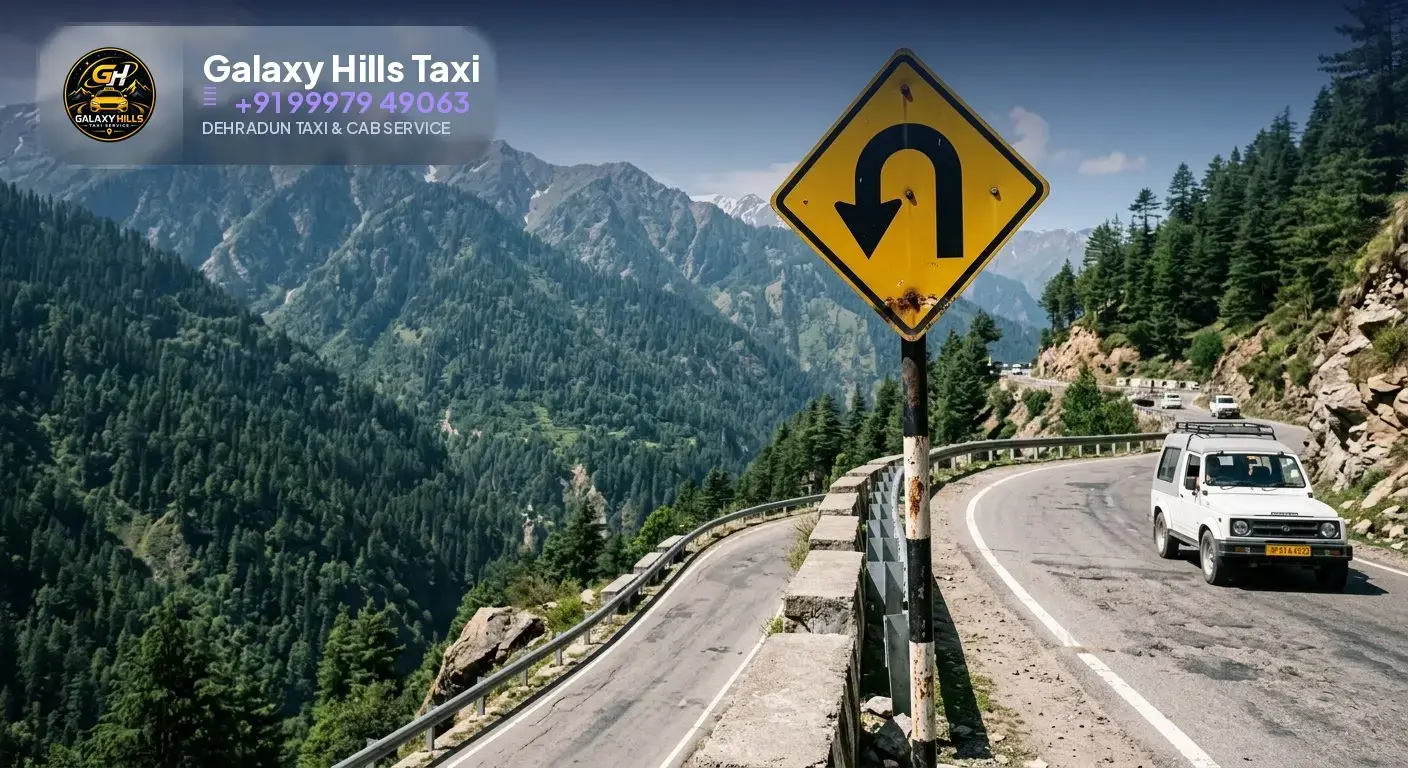
1. Start Early — Before the Weather Does
Mountain weather runs on a schedule: clear and calm between 6 am and noon, then fog, rain and cloud cover rolling in through the afternoon. Plan departures for 6-7 am. Visibility is better, roads are emptier, and the landslide risk that builds with afternoon rain is largely avoided.
2. Never Overtake on a Hairpin or Blind Curve
Hairpin bends make overtaking almost always a bad idea. Oncoming traffic appears without warning, and the outer edge frequently has no guardrail. The rule is simple: if you cannot see the full road ahead, you do not overtake. On single-lane mountain roads, uphill traffic gets right of way — a courtesy that keeps the whole mountain moving safely.
3. Honk Before Every Blind Bend
In the mountains the horn is a communication tool, not a warning device. Drivers sound it before every blind curve, narrow bridge and overtaking stretch so oncoming vehicles know someone is approaching. Locals expect it — a silent car arriving around a hairpin is considered careless.
4. Use Engine Braking, Not Just the Brake Pedal
Long descents in the Himalayas can run 10-15 km at a stretch. Riding the brake pedal overheats the pads and causes brake fade — one of the most common causes of mountain accidents. Experienced drivers shift to a lower gear and let the engine hold the speed, touching the brake only on the sharpest corners.
| Descent | Safe Technique | What to Avoid |
|---|---|---|
| Steep 10+ km descent | Lower gear, engine braking | Riding the brake pedal |
| Hairpin sequence | Slow-in, fast-out | Braking mid-corner |
| Slick/wet road | Extra distance, gentle inputs | Sudden steering |
5. Know the Monsoon Landslide Windows
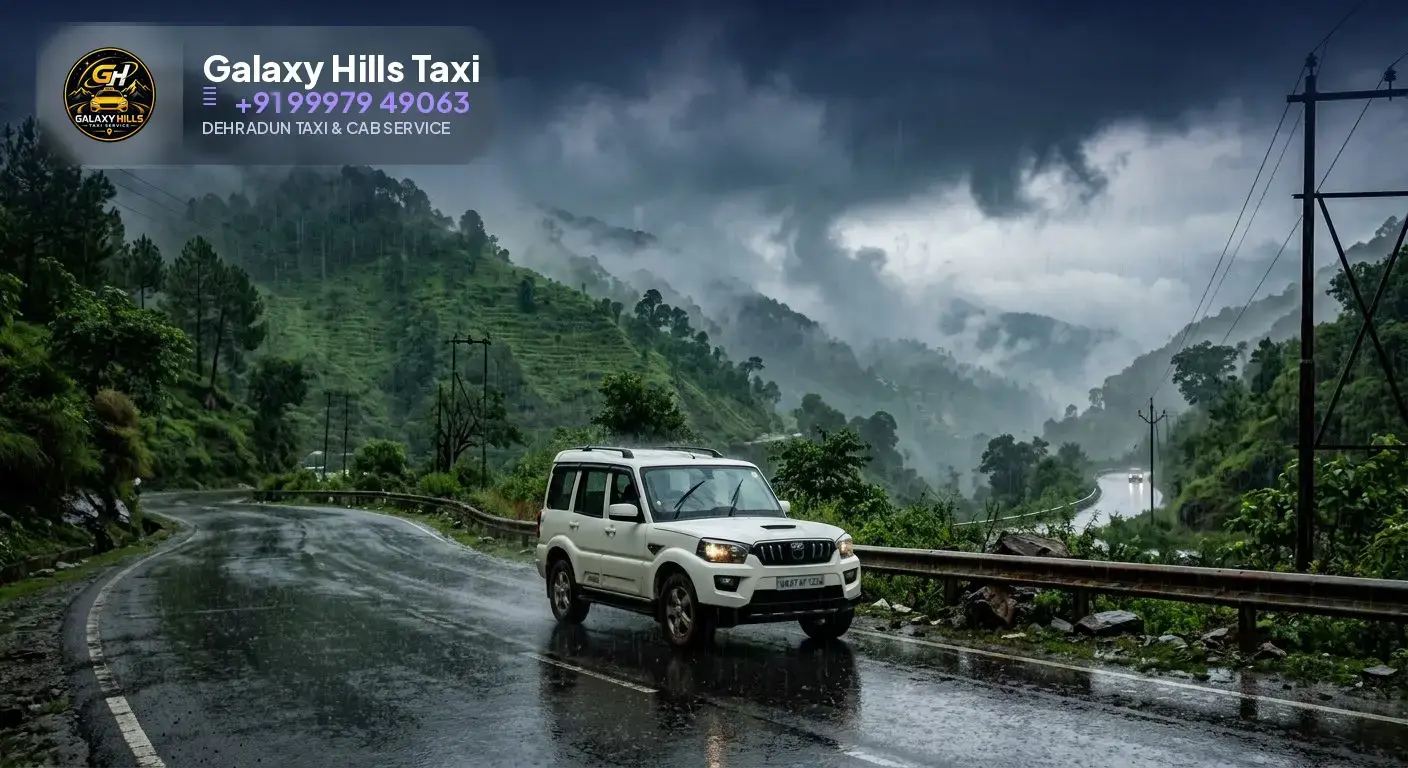
From July to mid-September, rain softens the slopes and landslide risk rises sharply, especially between 2 pm and dusk. Drivers watch weather radar, avoid known landslide stretches in heavy rain, and never force a blocked road. When authorities stop traffic for clearance, waiting is almost always safer and faster than squeezing through.
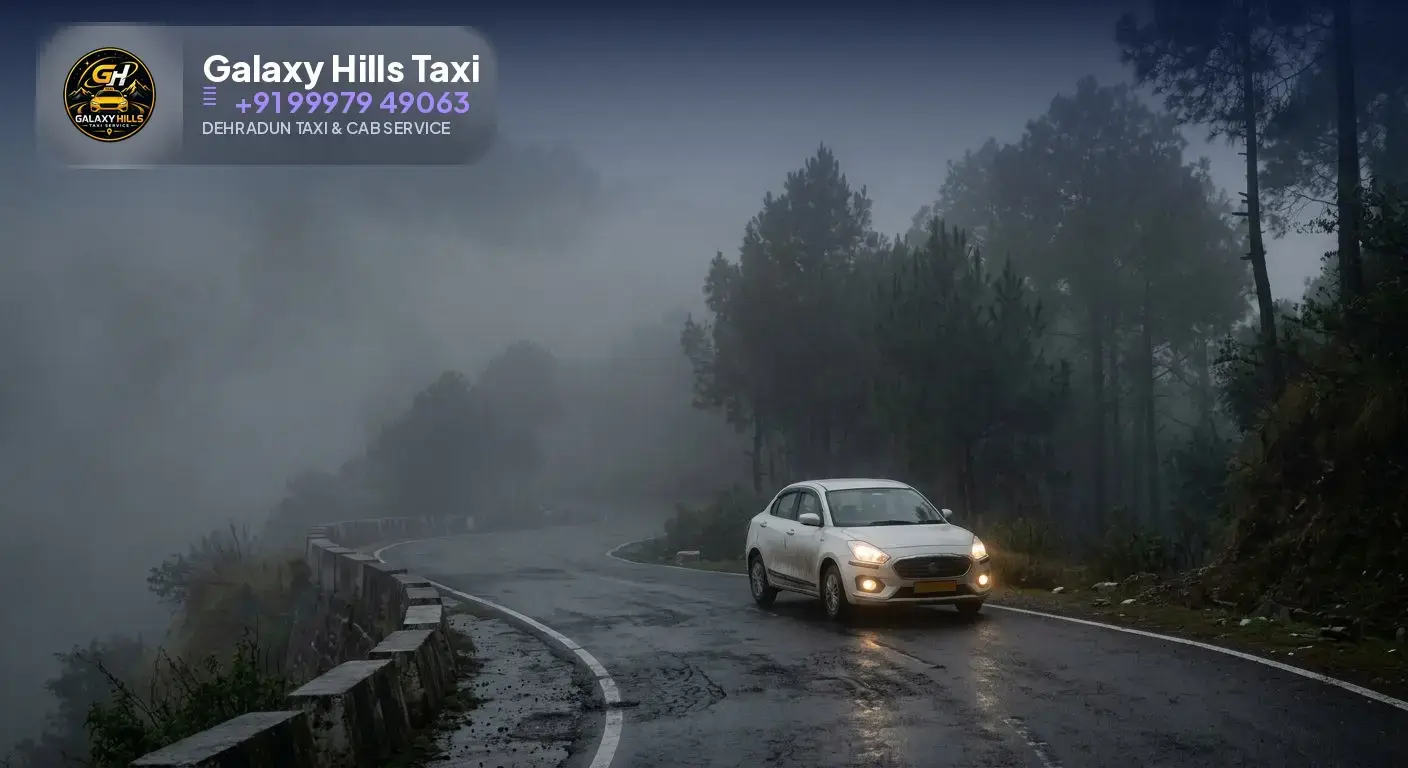
6. Fog, Snow and Black Ice in Winter
In December to February, hill driving moves to another level. Fog can cut visibility to a few metres, and overnight frost leaves black ice on shaded corners — invisible but genuinely dangerous. On such days drivers halve their speed, use fog lights, and carry chains for snow routes. If conditions are truly unsafe, we say so honestly rather than risk the journey.
7. Keep Double the Usual Distance
On gradients a following vehicle needs far more stopping distance, and the vehicle in front may stop suddenly — for a landslide, a goat crossing, a broken-down truck or a photo stop. Keep at least double the city gap between vehicles on every hill stretch.
8. What Passengers Should Do on Hill Roads
- Wear your seatbelt — on winding roads it matters in the back seat too
- Avoid distracting the driver — loud music and chatter at hairpins are not helpful
- Keep motion-sickness medicine handy — winding roads affect even seasoned travellers
- Never ask the driver to rush — the ETA you were given assumes safe speeds
- Stay in the vehicle at brief stops — landslide-prone stretches are not photo points
9. How to Check Your Taxi Before a Hill Trip
| Check | Why It Matters |
|---|---|
| Police verification of driver | Ask to see it |
| Tyre tread and brake condition | Glance at the vehicle yourself |
| First-aid kit, spare wheel, tools | Present in the boot |
| Fitness and insurance documents | Valid and inside the car |
| Fixed fare in writing | No surprise add-ons at the end |
10. Book With Drivers Who Live on These Roads
Galaxy Hills has run Dehradun taxis since 2016 with police-verified pahadi drivers who grew up on these routes. Fixed transparent fares, sanitised AC cabs, and honest advice — including telling you when not to travel. Whether it is a Mussoorie weekend, a Char Dham yatra, a Nainital getaway, or a Jolly Grant airport pickup, the driver who arrives is trained on these exact rules.
Ready to plan a hill trip? Call +91 99979 49063 or WhatsApp us — we will match the right car and driver to your route, and make sure you enjoy the mountains, not just endure them.
Frequently Asked Questions
Is hill driving in Uttarakhand safe for tourists?
Yes. Mountain roads are safe when driven with care — our police-verified pahadi drivers do these routes daily. Avoid the July-August monsoon and night driving for extra safety.
Should I self-drive in the Himalayas or hire a taxi?
For first-timers we recommend a taxi. Hairpins, landslides and fast weather changes are hard to judge without experience. A local driver who knows the road makes the trip safer and calmer.
What is the best time to travel on Uttarakhand hill roads?
Early morning, roughly 6 am to noon, when weather is most stable. Afternoon brings fog, rain and higher landslide risk, especially during the monsoon.
What should I check before booking a hill taxi?
Police verification of the driver, tyre tread and brakes, first-aid kit, valid documents, and a fixed fare agreement. Galaxy Hills covers all of these on every trip.
How do you drive a hairpin bend safely?
Slow down before the bend, not in it. Use a lower gear for engine braking on descents, honk before blind bends, and never overtake on the curve itself.
Galaxy Hills Taxi Service - Dehradun based since 2016, police-verified pahadi drivers